Call Center for Healthcare in Bacolod, Philippines: The Complete Guide for US Healthcare Businesses
A healthcare call center in Bacolod, Philippines is an offshore team of trained agents who answer patient calls, book appointments, verify insurance, chase unpaid claims, and follow up with patients on behalf of US medical practices, clinics, hospitals, and healthcare companies. US healthcare businesses use Bacolod because it delivers licensed, English-fluent, university-educated agents on US time zones for a fraction of what the same role costs to staff in Texas, New York, Florida, or California — commonly $7 to $12 per hour, against a fully loaded US in-house cost of $25 to $32 per hour.
That is the short answer. The long answer is the one that actually protects you, because healthcare is not e-commerce. Offshoring patient data carries real legal constraints that vary by state, by payer, and by the type of work you send offshore. Get it right and you free up 60 to 75 percent of your front-office cost. Get it wrong and you own a HIPAA breach you cannot enforce against.
This guide covers all of it: who needs a healthcare call center, what US law actually says about offshoring protected health information, which states restrict it, which states do not, what it costs, how it works, and the checklist to use when you choose a partner.
| The 60-second summary
• HIPAA does not ban offshoring. There is no US law that prohibits patient data being handled outside the United States. What is required is a signed Business Associate Agreement (BAA) and appropriate safeguards. • All 50 states can outsource commercial and private-pay healthcare support to the Philippines. • Roughly 9 states restrict offshoring for Medicaid and state-contracted work — including Texas, Florida, and Ohio. The restriction attaches to the payer and contract, not to the state as a whole. • The HHS Office of Inspector General surveyed all 56 Medicaid agencies: only 15 have any offshore rule at all, and just 4 prohibit offshore administrative outsourcing outright. • Realistic saving: 60 to 75 percent versus a US in-house hire, once you count payroll tax, benefits, PTO, turnover, and workspace. • The single most important thing you can do is scope the work so agents touch the minimum PHI necessary — and then paper it properly. |
Who Needs a Healthcare Call Center in the USA?
Healthcare call center demand in the United States is driven by one structural problem: the phone is still the front door of American healthcare, and the front desk is the hardest role in the practice to staff, train, and retain.
Front-desk turnover in medical practices is chronic. Every departure costs you recruiting time, six to eight weeks of training, and a period where calls go unanswered. And unanswered calls are not a service problem — they are a revenue problem. A missed call is a missed appointment, and a missed appointment in most specialties is several hundred to several thousand dollars of lifetime patient value walking to a competitor.
The organizations that get the most out of an offshore healthcare call center tend to fall into these groups.
1. Multi-location medical and dental groups
Once you run more than two or three sites, centralizing the phone into one trained team is almost always cheaper and better than paying each location to staff its own front desk. A single offshore team can carry the call volume of eight or ten clinics without any location ever going to voicemail.
2. Specialty clinics with high patient lifetime value
Orthopedics, dermatology, cardiology, fertility, oncology, physical therapy, pain management, plastic surgery, and med spas. These are practices where one converted inquiry is worth thousands of dollars, which means the cost of a missed call dwarfs the cost of answering it.
3. Cash-pay, elective, and wellness providers
Chiropractors, med spas, dental implant and orthodontic practices, weight-loss clinics, IV therapy, hearing clinics, vision, cosmetic surgery, and concierge medicine. This is the easiest group to support offshore, because much of the work is lead response and booking rather than deep clinical records handling. It is also the group with the least regulatory friction — no Medicaid contract means no state offshoring restriction. Our appointment setting and scheduling and cold calling for healthcare teams are built for exactly this profile.
4. Home health, hospice, and DME suppliers
These businesses run on intake coordination, referral chasing, authorization follow-up, and re-order calls. All of it is high-volume, script-driven, and repetitive — the exact profile that offshoring handles well.
5. Medical billing companies and RCM firms
Revenue cycle management is one of the largest offshore healthcare categories in the world. Claim status follow-up, denial management, AR chasing, eligibility verification, and payment posting are all handled offshore at scale. This is the domain of our administrative and back-office services team.
6. Telehealth and digital health companies
Venture-funded telehealth businesses have brutal unit economics and need to scale support headcount fast without burning runway on US salaries. They are among the most aggressive adopters of Philippine healthcare support.
7. Health insurance agencies and Medicare brokers
Especially during the Annual Enrollment Period, when call volume spikes 5x for ten weeks and hiring US seasonal staff is impossible. Offshore teams flex up and down. See our inbound call center services and live transfer services.
8. Hospitals and health systems
Larger systems typically offshore back-office and RCM functions rather than clinical-adjacent patient calls, and they do it under tightly negotiated contracts with heavy audit rights. This is the most compliance-sensitive segment and the one where state and payer restrictions bite hardest.
| The simplest test of whether you need one
Pull your phone report for last month. Find your abandoned-call rate and your after-hours voicemail count. If more than 8 to 10 percent of inbound calls go unanswered, or if voicemails are being returned the next business day rather than within the hour, you are already paying for a call center — you are just paying for it in lost patients instead of paid agents. |
| Not sure how many calls you are losing?
Send us last month’s call report and we will tell you what your missed calls are costing you, and what it would cost to answer them. No obligation. |
Is It Legal? What US Law Actually Says About Offshoring Patient Data
This is where most articles on this topic are either vague or wrong, so let us be precise.
HIPAA does not prohibit offshoring
There is no provision in HIPAA that stops protected health information (PHI) from being accessed, processed, or stored outside the United States. The US Department of Health and Human Services has stated this directly in its own published guidance: a covered entity or business associate may use a service provider whose servers or personnel sit outside the US, provided a compliant Business Associate Agreement is in place and the rest of HIPAA is followed.
The important consequence: geography is irrelevant to whether a vendor is a business associate. The moment an offshore call center agent views a patient record, discusses a patient’s identity and health matter on a call, or handles a billing statement, that call center is a business associate under HIPAA — regardless of what any contract says. So it must be papered as one.
The real risk is enforcement, not legality
Here is the honest part that a lot of offshore vendors will not tell you.
HIPAA gives the Office for Civil Rights (OCR) direct authority over business associates. But OCR has limited practical reach outside US borders. If an offshore vendor causes a breach and refuses to cooperate, regulators are unlikely to pursue them — and the liability, breach notification, remediation, and regulatory exposure land on you, the covered entity.
This is not a reason to avoid offshoring. It is a reason to offshore carefully. It means the quality of your partner’s controls and the strength of your contract are doing the work that regulatory enforcement will not do for you. Choose accordingly.
| What this means in practice
A cheap offshore call center with no BAA, no access controls, and agents working from home on personal laptops is not a bargain. It is an uninsured liability sitting on your license. A properly structured offshore operation — secured facility, locked-down access, no local data storage, signed BAA, audit rights — is a legitimate, widely used, and entirely lawful part of US healthcare operations. |
Which US States Can Outsource Healthcare to the Philippines?
Short answer: every state can, for commercial and private-pay work. The restrictions that exist are attached to Medicaid, state government contracts, and certain payer agreements — not to the state’s healthcare sector as a whole.
This distinction matters enormously and is almost always reported incorrectly. A dermatology practice in Houston taking commercial insurance and cash-pay patients is in a completely different position from a Medicaid managed care organization in Houston. Same city. Same state. Entirely different rules.
The federal baseline
Three federal facts frame everything:
- HIPAA: no geographic restriction. A BAA and reasonable safeguards are required. That is the whole federal requirement for most private healthcare.
- Medicaid: Section 6505 of the Affordable Care Act prohibits states from making payments for items or services to entities located outside the United States. CMS has clarified that this targets benefits and clinical services — not administrative support. Administrative functions such as claims processing, call center operations, and data entry are not prohibited by this section.
- Medicare Advantage and Part D: CMS has never banned offshoring. It requires plans to obtain detailed attestations for offshore subcontractors that receive, process, transfer, handle, store, or access beneficiary PHI, describing the functions performed, the PHI involved, and the safeguards in place. These obligations flow down through network and downstream agreements.
The state picture — what the government’s own audit found
The HHS Office of Inspector General surveyed all 56 Medicaid agencies (50 states, DC, and the territories) on their offshore outsourcing rules. The results are the clearest data available:
| Finding | Count | What it means for you |
|---|---|---|
| Medicaid agencies with NO offshore outsourcing requirement at all | 41 of 56 | The large majority of states impose no state-level offshore rule |
| Agencies with some form of offshore requirement | 15 of 56 | Rules exist — read them before contracting |
| Agencies that PROHIBIT offshore administrative outsourcing | 4 of 56 | The genuine hard stops |
| Agencies that ALLOW it (with BAAs in place) | 11 of 56 | Permitted, subject to conditions |
Read that again, because it reframes the whole debate: 41 of 56 Medicaid agencies have no offshore rule whatsoever, and only 4 prohibit it outright. The narrative that “US healthcare cannot outsource offshore” is simply not supported by the government’s own audit.
States with known offshoring restrictions (Medicaid and state contracts)
These are the jurisdictions where documented restrictions exist. Note carefully what each one actually binds — in most cases it is managed care organizations and state contractors, not every private practice in the state.
| State | What the restriction actually says | Who it binds |
|---|---|---|
| Texas | The Uniform Managed Care Contract (§4.11, Prohibition Against Performance Outside the United States) prohibits confidential information received from or on behalf of HHSC from being moved outside the US “at any time, for any period of time, for any reason,” and bars remote access to HHSC systems or data from outside the US. | Medicaid MCOs and their subcontractors and vendors |
| Florida | State law prohibits certain Florida-licensed providers using certified EHR technology from storing qualified electronic health records outside the US, its territories, or Canada. A data-localization mandate. | Certain FL-licensed providers using certified EHR tech |
| Ohio | Executive Orders 2011-12 and 2019-12D prohibit state executive agencies from contracting for services performed outside the US, extending to subcontractors. | State agencies and their subcontractors |
| Arizona | Medicaid Provider Participation Agreement Minimum Subcontract Provisions require services involving access to secure, sensitive, or personal client data to be performed within US borders. | Medicaid providers |
| Georgia | The Dept. of Community Health services contract prohibits suppliers from providing services from offshore locations. | DCH contractors |
| Mississippi | Medicaid BAA prohibits accessing, storing, sharing, transmitting, or disclosing PHI beyond US boundaries without express authorization from the Division of Medicaid. | Medicaid providers |
| Missouri | 2004 Executive Order requires state contract bidders to disclose offshore work and prohibits agencies from awarding such contracts, with narrow exceptions. | State contractors |
| Oklahoma | OHCA rules prohibit contracted entities from subcontracting duties to be performed outside the US. | Medicaid managed care entities |
| New Jersey / Tennessee | Documented offshore restrictions in Medicaid or state procurement contexts. | State/Medicaid contracts |
| California, New York | No general prohibition on offshoring identified. California MCOs do not prohibit the use of offshore resources. Standard HIPAA rules apply. | Commercial healthcare broadly free to offshore |
| Read this before you draw the wrong conclusion
Texas has the strictest language in the country — but it applies to Medicaid managed care organizations and their subcontractors. It does not stop a private cash-pay dental group in Dallas from using an offshore call center. Florida’s restriction is about storing certified EHR records offshore. It does not prohibit an offshore agent from making outbound appointment reminder calls. Ohio’s restriction binds state executive agencies. It is not a rule about private medical practices. The universal rule: the restriction follows the payer and the contract, not the ZIP code. Check your own payer agreements — many commercial payers impose offshore restrictions contractually even where no law requires it. |
So which states are actually outsourcing healthcare to the Philippines?
There is no public register of which US healthcare organizations use which offshore vendors, and any article that hands you a confident list of named hospitals and cities is inventing it. What can be said honestly is where the demand concentrates, and why.
Offshore healthcare supports demand in the US clusters in the states with the largest healthcare employment bases and the highest front-office wage costs. In practice that means:
| State / metro cluster | Why demand concentrates here | Typical work sent offshore |
|---|---|---|
| California — Los Angeles, Orange County, San Diego, Bay Area | Highest front-office wages in the country; large multi-site specialty and elective market; no general offshoring prohibition | Patient scheduling, inbound reception, med spa and elective lead response, RCM |
| Texas — Houston, Dallas–Fort Worth, Austin, San Antonio | Enormous private healthcare market and fast clinic growth. Commercial and cash-pay work offshores freely; Medicaid MCO work does not | Commercial scheduling, dental and specialty front office, billing follow-up |
| Florida — Miami, Tampa, Orlando, Jacksonville | Huge Medicare-age population, dense elective and concierge market, heavy home health and DME sector | Medicare AEP overflow, home health intake, DME reorder calls, patient retention |
| New York / New Jersey — NYC metro | Very high labor costs, dense specialty practice market | After-hours answering, scheduling, insurance verification |
| Arizona, Nevada, Georgia, North Carolina, Illinois | Fast-growing clinic markets with rising wage pressure | Front-desk overflow, appointment setting, RCM support |
| Nationwide — telehealth and digital health | Not geographically bound; scaling support without US salary burn | Patient support, chat, onboarding, retention |
The pattern is simple and worth stating plainly: the higher your local wage floor and the more of your revenue that comes from commercial or cash-pay patients, the stronger your case for offshoring is.
| Not sure whether your payer contracts allow offshoring?
Send us your payer mix and we will walk you through what can and cannot be offshored in your situation — including what to scope so agents never touch restricted data. We would rather tell you the truth than win a contract we should not have. |
What a Healthcare Call Center Actually Does
“Call center” undersells it. A modern healthcare BPO team runs a large share of the non-clinical operation. Here is what the work actually breaks down into.
Inbound patient-facing work
- Appointment scheduling, rescheduling, and cancellations — the highest-volume task in almost every practice.
- Virtual reception and front-desk overflow — see virtual receptionists.
- After-hours and weekend answering — 24/7 coverage without paying US night differentials. See phone answering services.
- New patient intake and registration — capturing demographics and insurance details accurately the first time.
- Prescription refill request routing and triage to the correct clinical staff member.
- Live transfer of qualified callers to your clinical or sales team — see live transfer services.
Outbound patient-facing work
- Appointment reminders and no-show reduction — typically the fastest ROI in the entire engagement.
- Recall and reactivation campaigns — calling lapsed patients back into care.
- Post-discharge and post-visit follow-up — satisfaction, adherence, and readmission reduction.
- Patient outreach and health program enrollment — see patient support services.
- Healthcare lead qualification and cold calling — see cold calling for healthcare and outbound call center services.
Revenue cycle and back office
- Insurance eligibility and benefits verification — before the visit, so you are not writing off avoidable denials.
- Prior authorization follow-up — the endless hold-music work that burns out US staff.
- Claim status follow-up and denial management
- Accounts receivable follow-up and patient balance calls
- Payment posting, data entry, and records management — see administrative and back-office services and back office outsourcing services.
Experience and retention
- Patient satisfaction surveys and NPS
- Complaint handling and service recovery
- Review generation and reputation follow-up — see customer experience and retention.
The full picture of what a healthcare BPO engagement can include is on our healthcare hub.
Explore: Healthcare BPO Services · Medical Call Center · Healthcare Outsourcing · Healthcare Provider Support
The Cost: What a Healthcare Call Center Really Costs
The number that matters is not the hourly wage. It is the fully loaded cost of putting a trained person on the phone for one hour — and that is where the US in-house comparison gets uncomfortable.
What a US in-house front-desk hire actually costs
Base pay for a medical receptionist or patient service representative in the US sits in the range of roughly $17 to $21 per hour depending on which salary source you use and where you are. But base pay is not the cost of the employee.
| Cost component | Typical range | Notes |
|---|---|---|
| Base hourly wage | $17 – $21 / hr | Higher in CA, NY, MA; lower in parts of the South and Midwest |
| Employer payroll taxes (FICA, FUTA, SUTA) | +8 – 10% | Non-negotiable |
| Health insurance and benefits | +$400 – $900 / month | A major and rising cost |
| Paid time off, sick leave, holidays | +8 – 12% | You pay for hours not worked |
| Workers’ comp and insurance | +1 – 3% | |
| Recruiting and onboarding | $2,000 – $5,000 per hire | Amortized — and front-desk turnover is high |
| Training ramp (6–8 weeks to productive) | Significant | Paid, but not yet producing |
| Workspace, desk, phone, software seat | $300 – $800 / month | Real, even if hidden in overheads |
| TRUE FULLY LOADED COST | $25 – $32 / hr | Roughly 1.3× to 1.5× base pay |
And that number assumes the seat is filled. It does not price the cost of the eight weeks the chair sits empty after someone quits, or the calls that go to voicemail while you recruit.
What the same role costs in Bacolod
Lead Outsource Development Inc. rates start from $7 per hour, with pricing varying by role complexity, shift coverage, and volume. There is no payroll tax, no health-benefit load, no PTO accrual, no recruiting fee, no desk, no software seat, no turnover cost. You pay for the hour worked.
| Role | US in-house (fully loaded) | Lead Outsource (Bacolod) | Your saving |
|---|---|---|---|
| Patient scheduling / virtual receptionist | $25 – $30 / hr | from $7 / hr | up to 75% |
| Inbound patient support agent | $26 – $31 / hr | from $7 – $9 / hr | up to 73% |
| Outbound / appointment setting agent | $26 – $32 / hr | from $8 – $10 / hr | up to 70% |
| Insurance verification / prior auth specialist | $28 – $34 / hr | from $9 – $12 / hr | up to 68% |
| AR / denial management specialist | $30 – $38 / hr | from $10 – $13 / hr | up to 67% |
| Team lead / supervisor | $38 – $48 / hr | from $13 – $16 / hr | up to 68% |
[CONFIRM] Rates above $7/hr are illustrative bands based on role complexity. LOD to confirm actual rate card per role before publishing.
The annual picture
For a single full-time seat, 40 hours a week, 52 weeks:
| US in-house | Lead Outsource (from $7/hr) | Annual saving | |
|---|---|---|---|
| 1 full-time agent | ~$56,000 – $62,000 | ~$14,560 | ~$45,000 |
| 3 agents | ~$168,000 – $186,000 | ~$43,680 | ~$135,000 |
| 5 agents | ~$280,000 – $310,000 | ~$72,800 | ~$225,000 |
| 10 agents (24/7 coverage) | ~$560,000 – $620,000 | ~$145,600 | ~$450,000 |
Note that the 24/7 comparison is not even like-for-like. Ten US staff covering nights and weekends means shift differentials and overtime. Ten Bacolod agents on US hours means simply working a day shift in a different time zone.
Price comparison: your realistic options
Offshore is not your only choice. Here is how the main options actually compare.
| Option | Typical cost | Strengths | Weaknesses |
|---|---|---|---|
| US in-house hire | $25 – $32 / hr fully loaded | Full control, on-site, no offshore compliance question | Highest cost. High turnover. Cannot flex. No after-hours without premium pay. |
| US-based answering service | $1.00 – $2.50 per minute, or $150 – $1,500+/mo tiers | Onshore, no BAA geography question, quick to start | Per-minute billing punishes growth. Agents are shared across many clients and rarely learn your practice. Message-taking, not real front-office work. |
| US nearshore (Latin America) | $12 – $20 / hr | Same time zone, bilingual Spanish strength | Meaningfully more expensive than the Philippines. Smaller healthcare-trained talent pool. |
| India BPO | $6 – $12 / hr | Enormous scale, deep RCM expertise | Accent neutrality is a common patient complaint in voice roles. Time zone is a poor fit for US day shift. |
| Freelance VA (Upwork/OnlineJobs) | $4 – $8 / hr | Cheapest headline rate | No BAA, no supervision, no redundancy, no QA, working from a home laptop. In healthcare this is a serious liability. If they quit, you start over. |
| Philippines BPO (Bacolod) | from $7 / hr | Best cost-to-quality ratio for US voice work. Neutral accent, strong US cultural affinity, dedicated agents who learn your practice, managed facility, 24/7 coverage. | Offshore compliance must be papered properly. Requires a real partner, not a freelancer. |
| The answering-service trap
Per-minute answering services look cheap until you grow. At $1.50/minute, a practice taking 1,200 minutes of calls a month pays $1,800 — for agents who take messages and know nothing about your practice. A dedicated Bacolod agent at $7/hour costs roughly $1,213 a month for 40 hours a week — and that agent knows your scheduling rules, your providers, your insurance panel, and your patients. You are usually paying more for less. |
How It Works: From First Call to Live Team
A well-run healthcare outsourcing engagement is not “send us your calls and hope.” It is a structured onboarding. Here is the process at Lead Outsource Development Inc.
- Discovery and scoping call. We map your call volume, your peak hours, your payer mix, your systems (EHR, PMS, phone), and — critically — exactly what data agents will and will not need to touch. Scoping PHI down to the minimum necessary is the single most valuable compliance decision made in the whole project, and it happens here.
- Compliance and contracting. Business Associate Agreement, confidentiality terms, access architecture, and audit rights are agreed before anyone touches anything. [CONFIRM — LOD to state BAA and compliance posture here.]
- Team selection. Agents are recruited and assigned to your account specifically. They are your team, not a shared pool. You interview them if you want to.
- Training and playbook build. We build your scripts, your scheduling rules, your escalation triggers, your FAQ, and your tone. Typical ramp is two to four weeks depending on complexity.
- Systems and access setup. Agents access your systems through controlled, logged, permissioned accounts. Data stays in your environment.
- Pilot. Start small and prove it. We run a 7-day pilot project so you can see real performance on real calls before committing to a full team.
- Go live and QA. Calls are monitored, scored, and coached. You get reporting on volume, answer rate, abandon rate, booking conversion, and quality scores.
- Scale. Add seats as the numbers justify it. Flex up for Annual Enrollment Period or seasonal spikes, and back down afterwards.
| Why the pilot matters more than the sales pitch
Any vendor can promise quality. A 7-day pilot lets you hear the calls, check the bookings, and score the agents before you sign anything meaningful. If a healthcare BPO will not let you pilot before committing, that tells you something. |
Why Bacolod? And Why the Philippines At All?
The Philippines: the country the world calls
The Philippine IT and business process management sector ended 2025 with export revenues above $40 billion and a workforce of roughly 1.9 million people, growing faster than the global industry average. The industry represents around 8 percent of Philippine GDP, and its 2026 baseline target is $42 billion in revenue and around 1.97 million workers. Healthcare is one of the fastest-growing segments within it.
Why does US healthcare in particular keep landing here?
- English. The Philippines ranks among the strongest English-proficiency nations in Asia. Crucially for voice work, the accent is neutral to American ears — the single biggest reason the Philippines beats other low-cost destinations for patient-facing calls.
- Cultural affinity with the US. Decades of American institutional, educational, and media influence mean Filipino agents understand US customer expectations, idiom, and service norms intuitively. On a patient call, that is not a soft benefit — it is the whole product.
- An educated, trainable workforce. Nursing, allied health, and healthcare administration are among the most popular degrees in the country. It is genuinely common to find agents with clinical or health-admin education handling US healthcare accounts.
- Time zone. Philippine agents work the US day shift as their standard schedule. Your patients call during business hours; your agents are at work.
- Maturity. This is a 30-year-old industry with established infrastructure, redundant telecoms, PEZA-accredited facilities, and deep operational know-how — not an experiment.
Bacolod: the smart choice inside the Philippines
Most people default to Manila or Cebu. That is often a mistake, and here is why Bacolod — the “City of Smiles,” capital of Negros Occidental — has become one of the country’s strongest outsourcing locations.
| Bacolod advantage | What it means for your account |
|---|---|
| Recognized IT-BPM “Center of Excellence” and a Philippine government “Next Wave City” | Not a frontier location. A designated, invested-in outsourcing destination. |
| 35,000+ BPO professionals already serving US, European, and Australian clients | A real, deep talent pool — not a few people in a spare office. |
| BPO employs roughly 40% of the city’s white-collar workforce | The industry is the city’s economic backbone, so it is taken seriously. |
| ~14,000 college graduates a year, including business, IT, and healthcare disciplines | Consistent pipeline of trainable, degree-educated agents. |
| Median age around 25 | A young, digitally native, energetic workforce. |
| Global operators already on the ground — Concentrix, Teleperformance, Transcom, Ubiquity, InteLogix, Iqor | The big players validated this city before you got here. |
| Lower attrition than Manila | This is the quiet one that matters most. Manila BPO attrition is punishing. In Bacolod, agents stay — which means your team keeps the knowledge you paid to build. |
| Lower operating cost than Manila or Cebu | Cost advantage passed to you. |
| PEZA-accredited facilities, redundant fiber (Converge, Globe), 24/7 backup power | Business continuity that a home-based freelancer cannot offer. |
| Growing health information management (HIM) cluster | Healthcare-specific talent, not just generic customer service. |
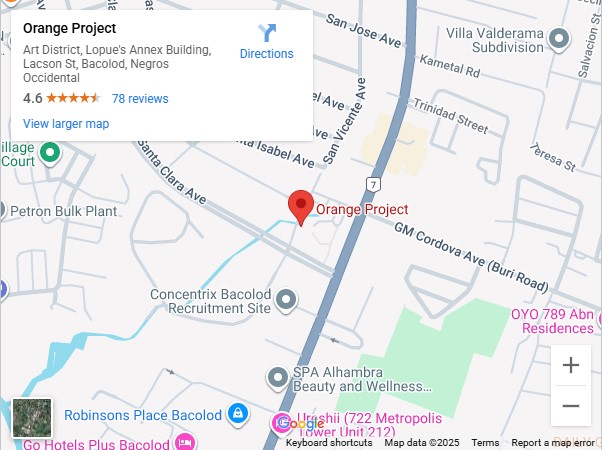
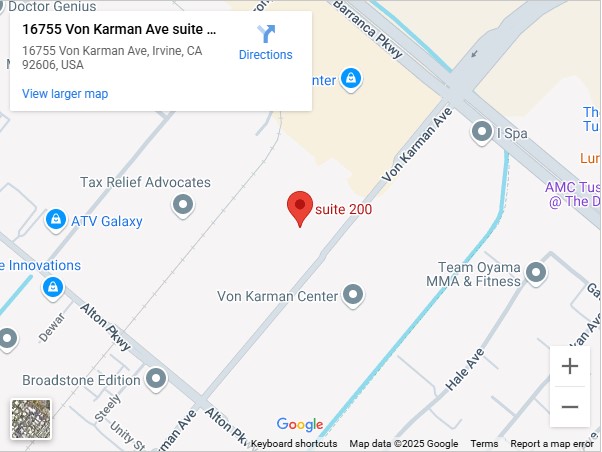
Lead Outsource Development Inc. is headquartered in Irvine, California, with our delivery operation in Bacolod City — 2nd Floor, Orange Building, Art District, Mandalagan. That structure matters: you contract with and are supported by a US entity, and the work is delivered by a managed team in a secured Philippine facility. You are not wiring money to an anonymous overseas contractor.
| See the operation before you commit
We will walk you through the Bacolod facility, introduce the team who would run your account, and show you exactly how access and security are handled. Then run a 7-day pilot and judge us on results. |
The Benefits: What Actually Changes in Your Practice
1. Cost falls 60 to 75 percent — and becomes variable
The headline benefit, but note the second half: offshore capacity is variable cost. You can flex it. A US employee is a fixed cost whether the phone rings or not.
2. Your abandoned-call rate collapses
This is where the money actually is. If you are abandoning 15 percent of inbound calls and you drop that to 2 percent, you have not saved money — you have found revenue. For most practices, the recovered appointments alone exceed the entire cost of the offshore team.
3. You get 24/7 coverage without night differentials
Patients call after hours. Competitors let it go to voicemail. If you answer, you win the patient — and you win them at the exact moment they decided they needed care.
4. No-shows drop
Systematic reminder calling is boring, repetitive work that US front-desk staff never get to because they are firefighting the front counter. An offshore team does it relentlessly. No-show reduction is often the fastest, cleanest ROI in the whole engagement.
5. Your clinical staff stop doing admin
Every hour a nurse or provider spends on hold with an insurer chasing prior auth is an hour of clinical capacity destroyed. Moving that work offshore is not just cheaper — it converts your most expensive people back into revenue-generating people.
6. You can scale without a hiring cycle
Opening a new location, launching a campaign, or entering Annual Enrollment Period does not require a three-month recruiting scramble. Add seats.
7. Turnover stops being your problem
Recruiting, training, covering absences, and managing attrition become the BPO’s job, not yours. The continuity risk shifts off your desk.
How to Choose the Best Healthcare Call Center Partner: A Buyer’s Checklist
This is the section to actually use. Print it. Take it into every vendor conversation — including ours. Any partner worth hiring will answer all of these without flinching.
Compliance and security — the non-negotiables
- Will you sign a Business Associate Agreement? If the answer is anything other than an immediate yes, walk away. This is the legal foundation of the entire relationship.
- Will you sign an offshore-specific BAA addendum? Standard BAAs are written for domestic vendors. Offshore arrangements need extra provisions — international arbitration, cyber liability insurance, expanded termination rights, and data retention limits.
- Where does the data actually live? The strongest architecture is one where PHI never leaves your US systems and agents access it remotely through controlled, logged sessions — nothing stored, printed, or downloaded locally.
- Can agents print, download, screenshot, or use USB devices? The correct answer is no, and it should be technically enforced, not merely promised.
- Is it a secured facility, or are agents working from home? For healthcare, this matters enormously. Ask about clean-desk policy, no phones on the floor, badge access, and CCTV.
- What is your breach notification process and timeline? HIPAA requires notification without unreasonable delay and no later than 60 days after discovery. Your vendor needs to get you information far faster than that.
- Do you carry cyber liability insurance? How much? Because if OCR cannot reach them, your contract is your only recourse.
- Can I audit you? Annual audit rights should be in writing. CMS guidance for offshore contractors points toward annual audits as a norm.
- Are agents trained on HIPAA specifically — and how do you evidence it? Ask to see the training and the completion records, not a claim on a website.
- How do you enforce minimum necessary access? Agents should see only the data their task requires. Ask how it is technically restricted.
Operational quality
- Are the agents dedicated to my account, or shared across clients? Dedicated agents learn your practice. Shared pools take messages.
- Who exactly will be on my team, and can I interview them?
- What is your agent attrition rate? Ask for the actual number. High attrition means you re-train forever.
- What does your QA process look like? How many calls are scored per agent per week, and can I see the scorecards?
- What happens if the internet or power goes down? Redundant fiber and backup generation should be a given.
- Will you run a paid pilot before I commit?
- Who is my single point of contact, and what is their escalation path?
- What reporting will I get, and how often?
Commercial
- Is pricing per hour, per seat, or per minute? Per-minute pricing punishes you for growing. Per-hour or per-seat is usually the honest model.
- What is the minimum commitment and the notice period to exit?
- Are training and ramp hours billed?
- What happens to my scripts, data, and playbooks if I leave? They should be yours.
| Red flags — walk away if you see these
• Hesitation, vagueness, or “we’ll look into it” on the BAA question. • Agents working from home on personal computers for PHI-touching work. • Refusal to let you pilot, or heavy pressure to sign a long contract immediately. • Claims of “HIPAA certified.” There is no such thing as official HIPAA certification. A vendor claiming it either does not understand the regulation or is hoping you do not. • Pricing that seems impossibly cheap. Below roughly $6/hour, something is being cut — and in healthcare it is usually the security controls. • No named point of contact, or a different account manager every month. • Won’t tell you their attrition rate. |
Facts and Figures at a Glance
| Data point | Figure | Source / context |
|---|---|---|
| Philippine IT-BPM export revenue, 2025 | Above $40 billion | IBPAP |
| Philippine IT-BPM workforce, 2025 | ~1.9 million | IBPAP |
| 2026 baseline target | $42 billion / ~1.97 million workers | IBPAP roadmap |
| Share of Philippine GDP | ~8% | IBPAP |
| Sector growth 2025 vs global average | 5% vs 3% global | IBPAP |
| 2028 industry roadmap target | $59 billion / 2.5 million workers | IBPAP |
| Bacolod BPO workforce | 35,000+ | Serving US, European, Australian clients |
| BPO share of Bacolod white-collar workforce | ~40% | Industry reporting |
| Bacolod college graduates per year | ~14,000 | Business, IT, engineering, healthcare |
| US Medicaid agencies with NO offshore rule | 41 of 56 | HHS Office of Inspector General survey |
| US Medicaid agencies prohibiting offshore admin outsourcing | 4 of 56 | HHS OIG survey |
| US medical receptionist base pay | ~$17 – $21 / hr | Multiple US salary sources, 2026 |
| US fully loaded front-desk cost | ~$25 – $32 / hr | Base pay × 1.3–1.5 employer burden |
| Lead Outsource Development rates | from $7 / hr | Up to 75% saving |
Frequently Asked Questions
Is it legal for a US healthcare business to use a call center in the Philippines?
Yes. HIPAA contains no geographic restriction and does not prohibit protected health information from being accessed or stored outside the United States. What is required is a signed Business Associate Agreement with the offshore provider and appropriate administrative, physical, and technical safeguards. The important exceptions are Medicaid and state-contracted work in certain states, and specific payer contracts that may prohibit offshoring by agreement even where no law requires it. Always check your own payer contracts.
Does HIPAA apply to a call center in Bacolod?
Yes. Any offshore provider that creates, receives, maintains, or transmits PHI is a business associate under HIPAA the moment it touches patient data — geography is irrelevant to that status. It must therefore operate under a BAA and implement HIPAA-equivalent safeguards. The practical difference offshore is enforcement: US regulators have limited reach abroad, so your contract and your partner’s controls carry more weight than they would with a domestic vendor.
Which US states cannot outsource healthcare offshore?
No state bans offshoring for commercial and private-pay healthcare. Restrictions apply to Medicaid and state-contracted work in a minority of states. Texas has the strictest language — its Uniform Managed Care Contract prohibits work or information going outside the US for Medicaid MCOs and their subcontractors. Florida restricts offshore storage of certified electronic health records for certain licensed providers. Ohio prohibits state executive agencies from contracting for offshore services. Arizona, Georgia, Mississippi, Missouri, Oklahoma, New Jersey, and Tennessee also have documented restrictions in Medicaid or state procurement. The HHS Office of Inspector General found that 41 of 56 Medicaid agencies have no offshore rule at all, and only 4 prohibit it outright.
Can Texas healthcare businesses use a Philippine call center?
Yes, for commercial, private-pay, and cash-pay work. Texas’s restriction is in the Medicaid Uniform Managed Care Contract and binds managed care organizations and their subcontractors and vendors — it is not a blanket ban on Texas healthcare businesses. A private dental group, chiropractic clinic, med spa, or specialty practice in Dallas or Houston can use an offshore call center. A Medicaid MCO cannot send that work offshore. Check which side of that line your revenue sits on.
Can Florida healthcare businesses outsource to the Philippines?
Yes, with one specific caution. Florida law restricts certain Florida-licensed providers using certified EHR technology from storing qualified electronic health records outside the United States, its territories, or Canada. That is a data-storage localization rule. It does not prevent an offshore team from making appointment reminder calls, handling inbound scheduling, or performing patient outreach. The architecture matters: keep the records in your US systems and have agents access them remotely rather than storing anything offshore.
What does a healthcare call center in the Philippines cost?
Lead Outsource Development Inc. rates start from $7 per hour, varying by role complexity, shift coverage, and volume. Compare that to a fully loaded US in-house front-desk cost of roughly $25 to $32 per hour once payroll taxes, benefits, paid time off, recruiting, training, workspace, and turnover are included. For a single full-time seat, that is roughly $14,500 a year offshore against $56,000 to $62,000 in-house.
How much can we realistically save?
Between 60 and 75 percent on the labor cost of the function, depending on the role. But the larger financial effect for most practices is not the cost saved — it is the revenue recovered from calls that were previously abandoned and appointments that were previously no-showed.
Will patients be able to tell the agent is offshore?
Filipino agents are known for neutral accents and strong cultural affinity with the United States, which is the main reason the Philippines dominates US voice work rather than lower-cost alternatives. Agents are trained on your scripts, your providers, and your tone. Most patients experience it as calling your practice.
Can offshore agents work US hours?
Yes. US-hours coverage is standard, and 24/7 coverage is available without the night-shift differentials and overtime premiums a US employer would pay.
What is the minimum team size we can start with?
You can start with a single agent, and we recommend proving the model with a 7-day pilot project before scaling. Small start, real data, then grow.
How long does it take to get a team live?
Typical ramp is two to four weeks from contracting to live calls, depending on the complexity of your scripts and systems. Simple appointment-setting and reception work is at the fast end; insurance verification and RCM work takes longer to train.
What happens to our data if we end the contract?
Your data, scripts, playbooks, and recordings should remain yours, and your contract should say so explicitly, along with a defined data return and destruction process. Ask any vendor to show you that clause before you sign.
Is a freelance virtual assistant a cheaper alternative?
It is cheaper on the headline rate and considerably more expensive in risk. A freelancer working from a home laptop, with no BAA, no supervision, no QA, no redundancy, and no facility security, handling protected health information, is an exposure sitting directly on your license. For non-PHI work it can be fine. For patient data it is a poor trade.
What is a Business Associate Agreement and do we really need one?
A BAA is the contract HIPAA requires between a covered entity and any vendor that handles PHI on its behalf. It is not optional and it is not paperwork for its own sake — it is the legal mechanism that binds your offshore partner to HIPAA-equivalent safeguards, breach reporting, and your audit rights. No BAA, no engagement.
Ready to Find Out What This Would Look Like for Your Practice?
Lead Outsource Development Inc. is a US-headquartered BPO with a delivery hub in Bacolod City, Philippines. We are based in Irvine, California, with 300+ professionals supporting healthcare, insurance, e-commerce, and cleaning businesses across the United States, 24/7, from $7 an hour.
We would rather start small and prove it than sell you a big contract on a promise.
| Start with a 7-day pilot project
Give us one workflow — inbound scheduling, appointment reminders, insurance verification, whatever is hurting most. We will run it for a week. You listen to the calls, check the bookings, and decide with real data instead of a sales deck. |
Call us: +1 (949) 216-8151 (Irvine, CA) · Get a free staffing quote
Keep reading
- Healthcare BPO Services — the full range of healthcare support we provide.
- Medical Call Center — dedicated medical call handling.
- Patient Support Services — patient-facing outreach and support.
- Healthcare Outsourcing — how healthcare outsourcing works end to end.
- Administrative and Back-Office Services — RCM, verification, and data work.
- Healthcare Provider Support — support built around providers.
- Customer Experience and Retention — keeping the patients you win.
- Cold Calling for Healthcare — proactive patient and client acquisition.
- All Outsourcing Services · Why Choose Us · Client Reviews
 Claims Processing Outsourcing for US & Canadian Healthcare Payers
 SEO and Website Design for Chiropractors
Related Posts

About the Author: Lead Outsource Development Inc.

- Who Needs a Healthcare Call Center in the USA?
- Is It Legal? What US Law Actually Says About Offshoring Patient Data
- Which US States Can Outsource Healthcare to the Philippines?
- What a Healthcare Call Center Actually Does
- The Cost: What a Healthcare Call Center Really Costs
- How It Works: From First Call to Live Team
- Why Bacolod? And Why the Philippines At All?
- The Benefits: What Actually Changes in Your Practice
- How to Choose the Best Healthcare Call Center Partner: A Buyer's Checklist
- Facts and Figures at a Glance
- Frequently Asked Questions
- Ready to Find Out What This Would Look Like for Your Practice?